
Book Review - Sound Analysis and Synthesis with R
Published:
R might not be the most obvious choice for analysing audio data, but a growing number of packages now make it possible to analyse and synthesise sound. One of them is seewave, and Jérôme Sueur, one of its authors, has written a book on working with audio data in R. It’s called Sound Analysis and Synthesis with R, published by Springer in 2018, and I’d highly recommend it to anyone working with audio.
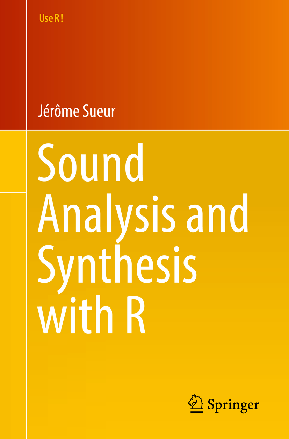
The book opens with a general explanation of sound, then introduces R to readers with no prior experience. Across its 17 chapters, the author works through the basic audio analyses you can do in R, explaining the underlying concepts with both mathematical equations and R code. There’s some material on sound synthesis too, though it’s a minor theme next to the space given to analysis. The supplementary materials include the sound samples used throughout.
As I said, the book’s main focus is analysing sound, mostly in scientific settings. Researchers and data scientists typically want to load, visualise, play, and quantify a particular sound, and the book covers these basics with code examples that are easy to follow and richly illustrated with R-generated plots. You can preview it here.
If you ever need to paste, delete, repeat, or reverse audio files in R, you’ll find recipes for all of them here. The book also has twenty DIY Boxes, which show alternative ways to use the functions already covered and demonstrate new tasks, ranging from loading and plotting audio files to frequency and amplitude analysis.
Although the author created his own package, the book also shows how to use a wide range of other audio-specific R packages, such as tuneR and warbleR.
My only wish is that this book had come out sooner — it would have saved me a lot of pain doing audio analyses.
Final verdict: 5/5